



未购
中图号TU98
语种ENG
出版年2021
出版信息
Wiley
EISBN
9781119717720
PISBN
9781119717706
版次
1
- 介绍
- 目录
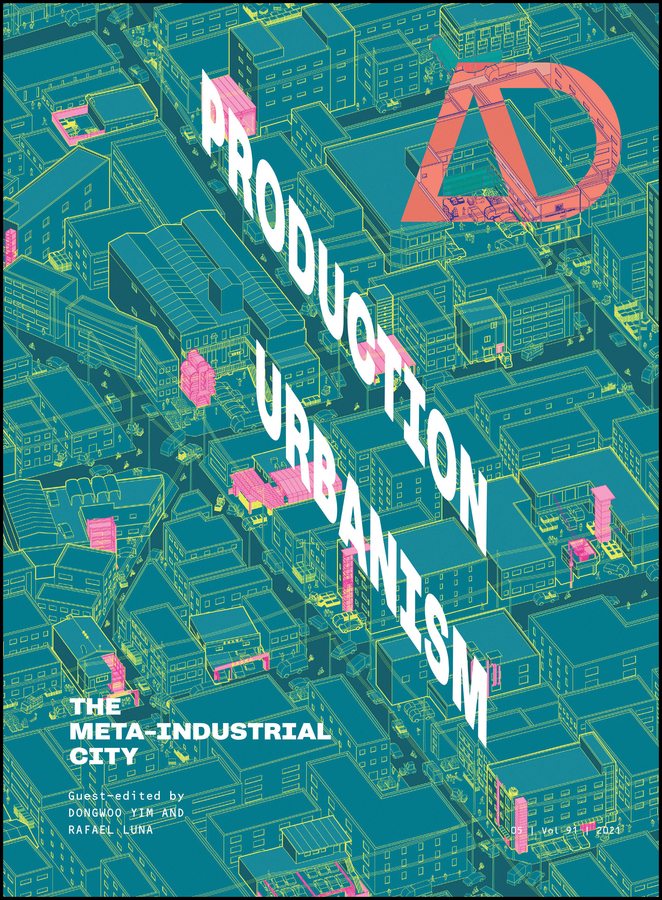
The Industrial Revolution caused a paradigm shift from an agrarian economy to a manufacturing economy, giving birth to the industrial city. City became synonymous with a concentration of factories causing unfiltered scenes between centres of production and urban dwellings. The corrupted image of the city ultimately led to the displacement and separation of production away from residential zones in the 20th century. However, new innovative manufacturing technologies are allowing a coexistence between factories and dwellings through hybrid typologies that blend production back into the urban fabric. This AD issue discusses the implications of the re-emergence of production as an architectural and urban agenda through hybrid models that engage a new socioeconomic shift. Given the contemporary circumstances of a global pandemic affecting global supply chains, it is necessary to deliver a vision for a new productive urbanism that allows autonomous circular economies to flourish. Our 21st-century cities have an obligation to explore a new industrial revolution of shared economies that optimise the use of the legacy systems, infrastructure and building stock. Yet it is ultimately up to architecture to take arms in delivering new typologies. Contributors: Frank Barkow, Michele Bonino and Maria Paola Repellino, Kristiaan Borret, Vicente Guallart, Tali Hatuka, Doojin Hwang, Yerin Kang and Chihoon Lee, Kengo Kuma, Wesley Leeman, Scott Lloyd and Alexis Kalagas, Winy Maas, DK Osseo-Asare, Marina Otero Verzier, Nina Rappaport, and Shohei Shigematsu. Featured architects: Barkow Leibinger, DJH Architects, Goldsmith, Kengo Kuma & Associates, MVRDV, OMA, and TEN.